Double Fried Plantains (Tostones)

Featured

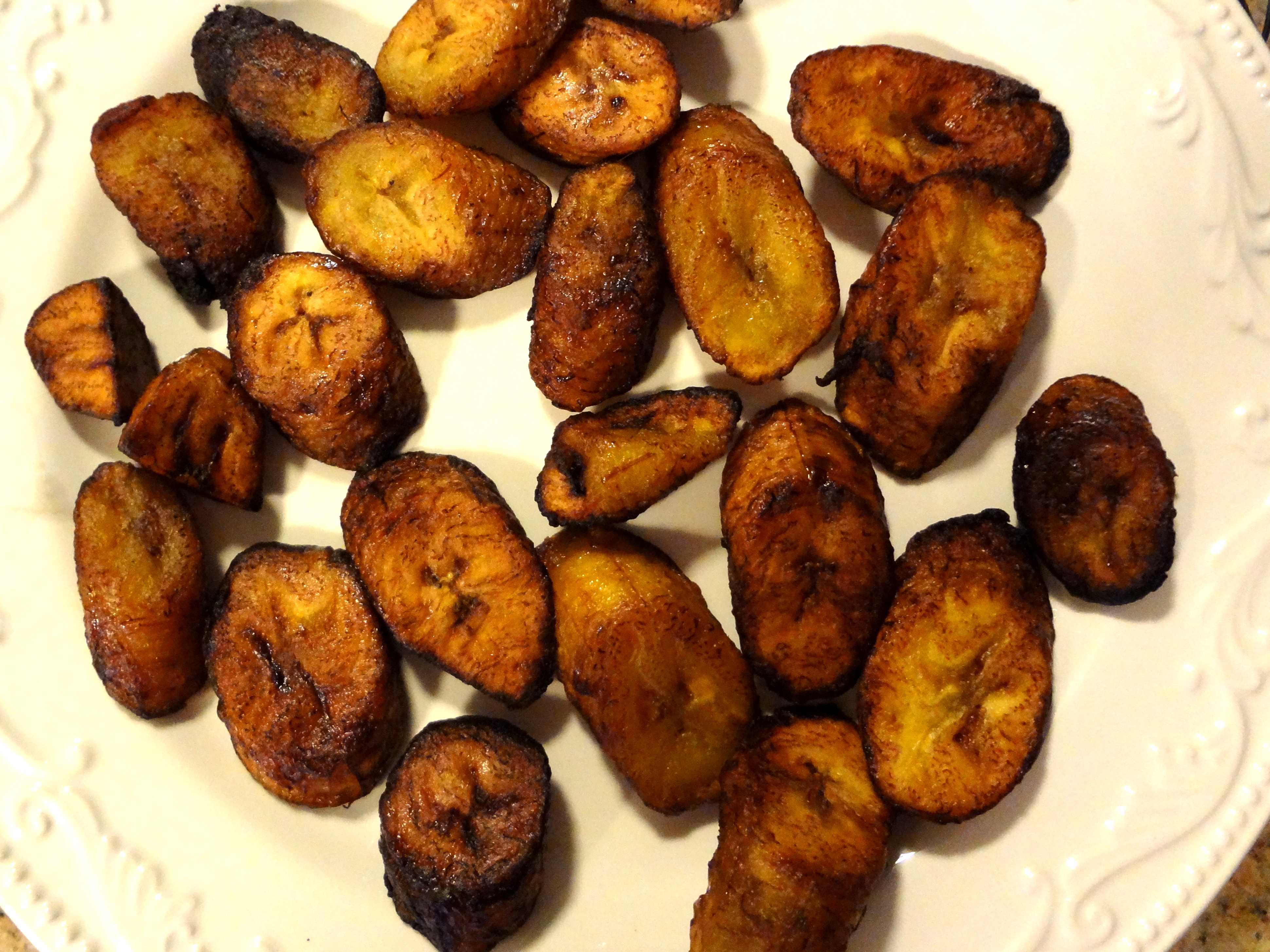
My previous post was all about the fried ripe plantain, which introduced how to use a plantain at the end of it’s peak.

Double Fried Plantains, Tostones, utilizes the plantain in its green unripened stage.

DSC00497

Light, airy, salty, they are as satisfying as french fries and as addictive.

DSC00983

I remember watching my grandmother Mama fry thick rounds of green plantain pieces until they were golden yellow, then pass them out of the oil straight to my  grandfather, Koki, who would promptly place a round in the center of his wooden plantain press, known as a tostonera, and one by one, would flatten the batch, which would then promptly placed back into the hot oil by Mama, for a second frying. It’s was like watching them perform an intricate dance of fry, smash and fry. Once removed from the oil, they would be plated, salted,and served immediately, being passed from person to person, until there were none left.

I was not so graceful when I first prepared tostones. Mama and Koki had made it look so easy, that I underestimated the difficulty of the solo execution of the three step cooking process of frying/smashing/frying without burning myself or the plantains. I figured out that it was OK to turn off the oil after the first round of frying, and take my time smashing the plantains, then reheat the oil for the second fry process. They turned out just fine.

The tostonera press is not a necessary tool. Koki had also used a folded paper grocery bag and the heel of his hand bag to flatten them, which worked just as well. I did not have a tostonera and found the paper bag a good substitute, just make sure you fold it a few times, to protect yourself from the heat of the plantain. You can also place them on wax paper, fold it over, and use a thick flat surface such as cutting board to press down. You do not need or want to press too hard, causing the plantain to stick to bag & break into pieces. It’s really a gentle push to flatten the round.

If are into kitchen gadgets and interested in purchasing a tostonera, here are links to the online stores, Cuban Food Market, http://www.cubanfoodmarket.com, and Tostobueno, http://tostobueno.com/, which sell all kinds of tostoneras

The recipe for tostones is similar to maduros (sweet fried plantains), except for the added steps of smashing and re-frying. This is recipe is also mindful that there is only one cook preparing these, however if you have someone to smash while you fry, you can keep the oil on and continue with the second fry step. I recommend to provide your smashing helper with a cocktail, and yourself as well. Keeps the atmosphere festive in a hot kitchen.

You may use as many plantains you like, depending on the size of the crowd.

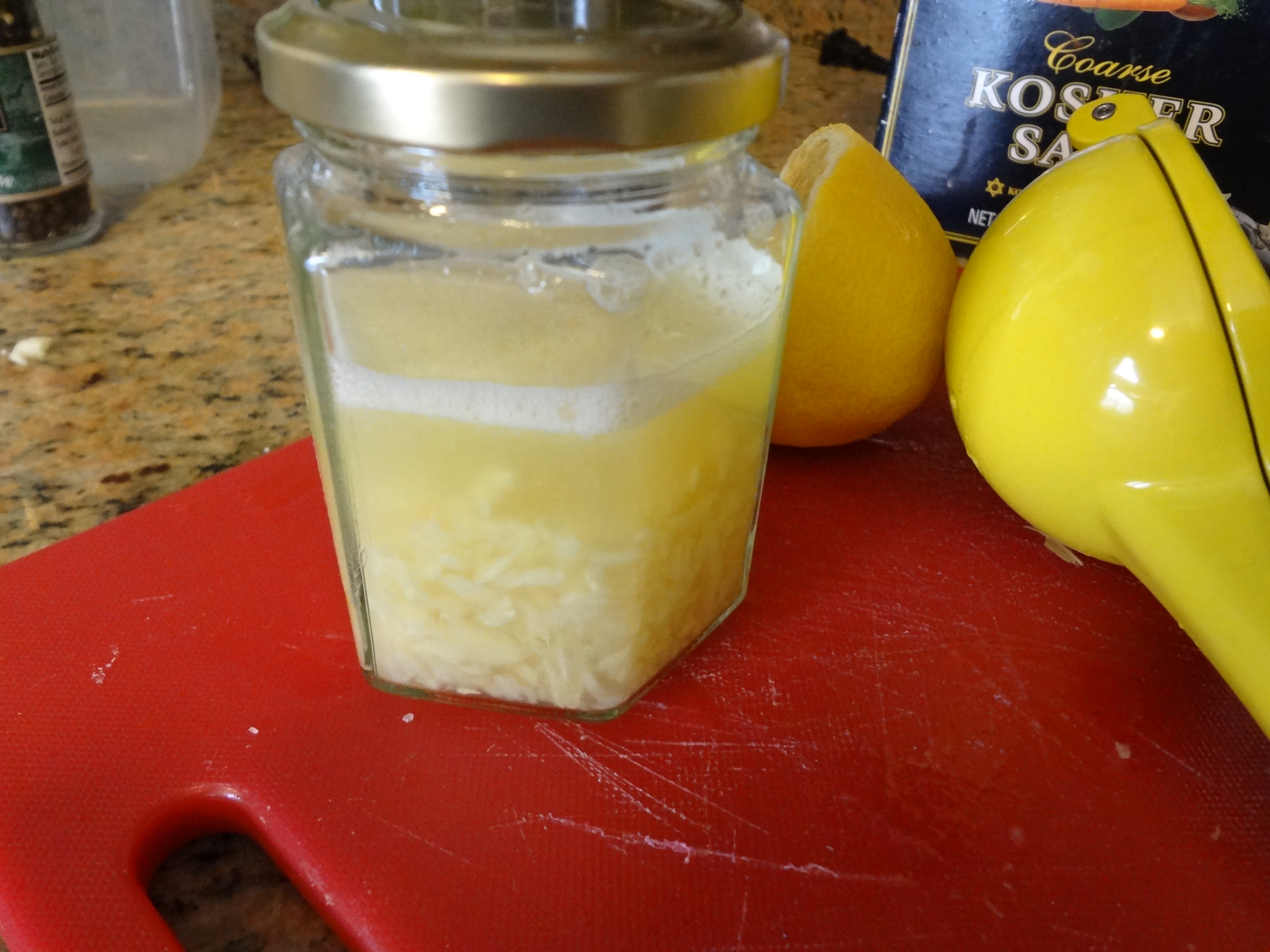
I like to serve them with Mojo, a condiment made from fresh garlic, salt and lemon juice.

Tostones

3 Green Plaintains

Canola or Vegetable Oil

For Mojo Condiment:

3 Lemons

8 Cloves of Garlic

Kosher Salt or Coarse Sea Salt

Mortar & Pestle

Small glass jar ( I use an old jam jar)

You’ll want to prepare the Mojo first to give the dressing time to come together.

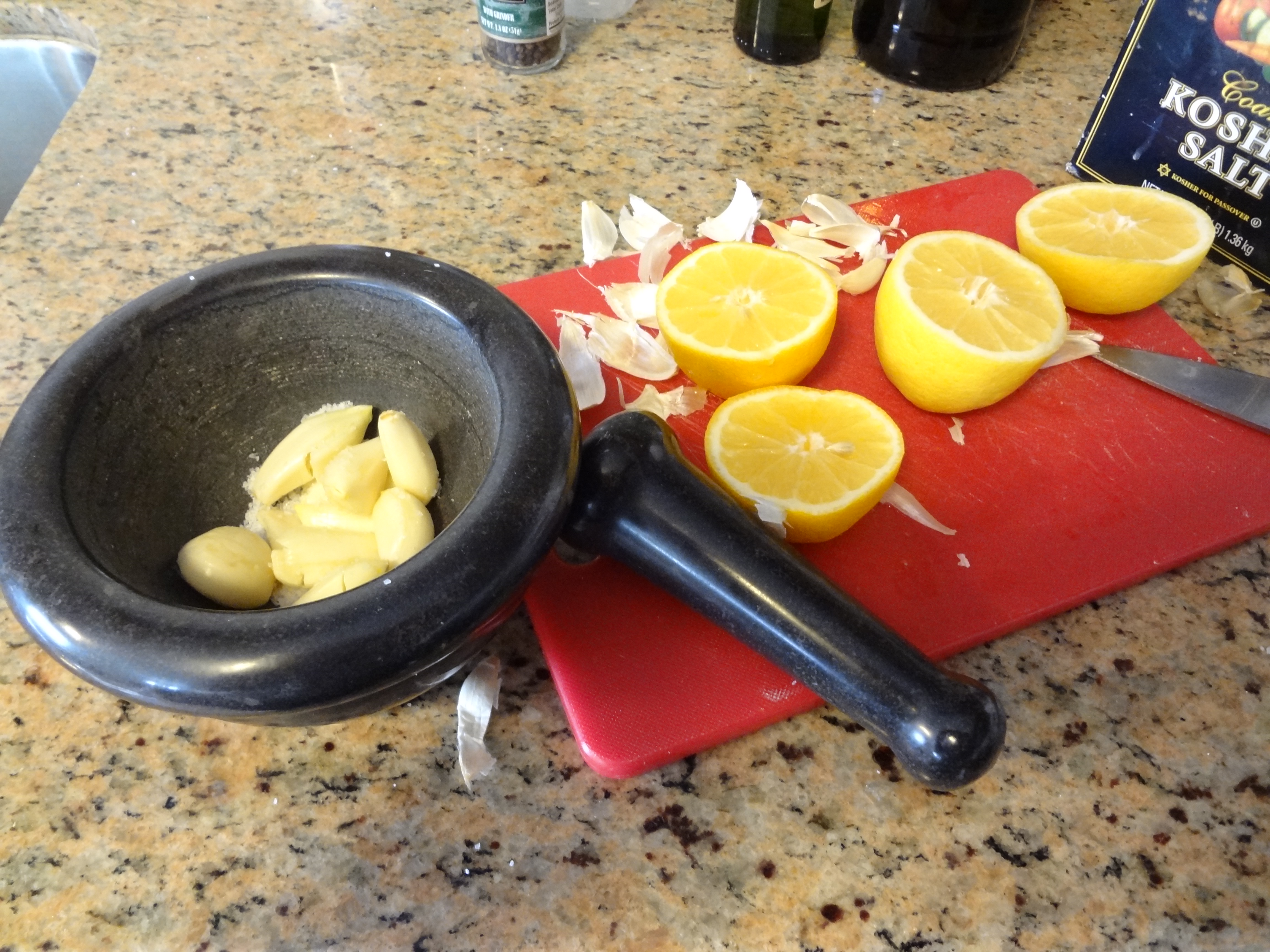
Place the garlic and salt in the mortar and use the pestle to smash the garlic and salt into a paste. Transfer garlic paste into an jar  and add fresh squeezed lemon juice. Cover the jar tight and shake to mix. Let sit until ready to serve with Tostones.
DSC00472DSC00473DSC00477DSC00481

Remove the peel of the plantains by cutting off the top part, then sliding your knife lengthwise, making an incision to reach the flesh. The peel should come off like a jacket. Slice your plantain into oblong slices, about an inch thick.DSC00438

DSC00442
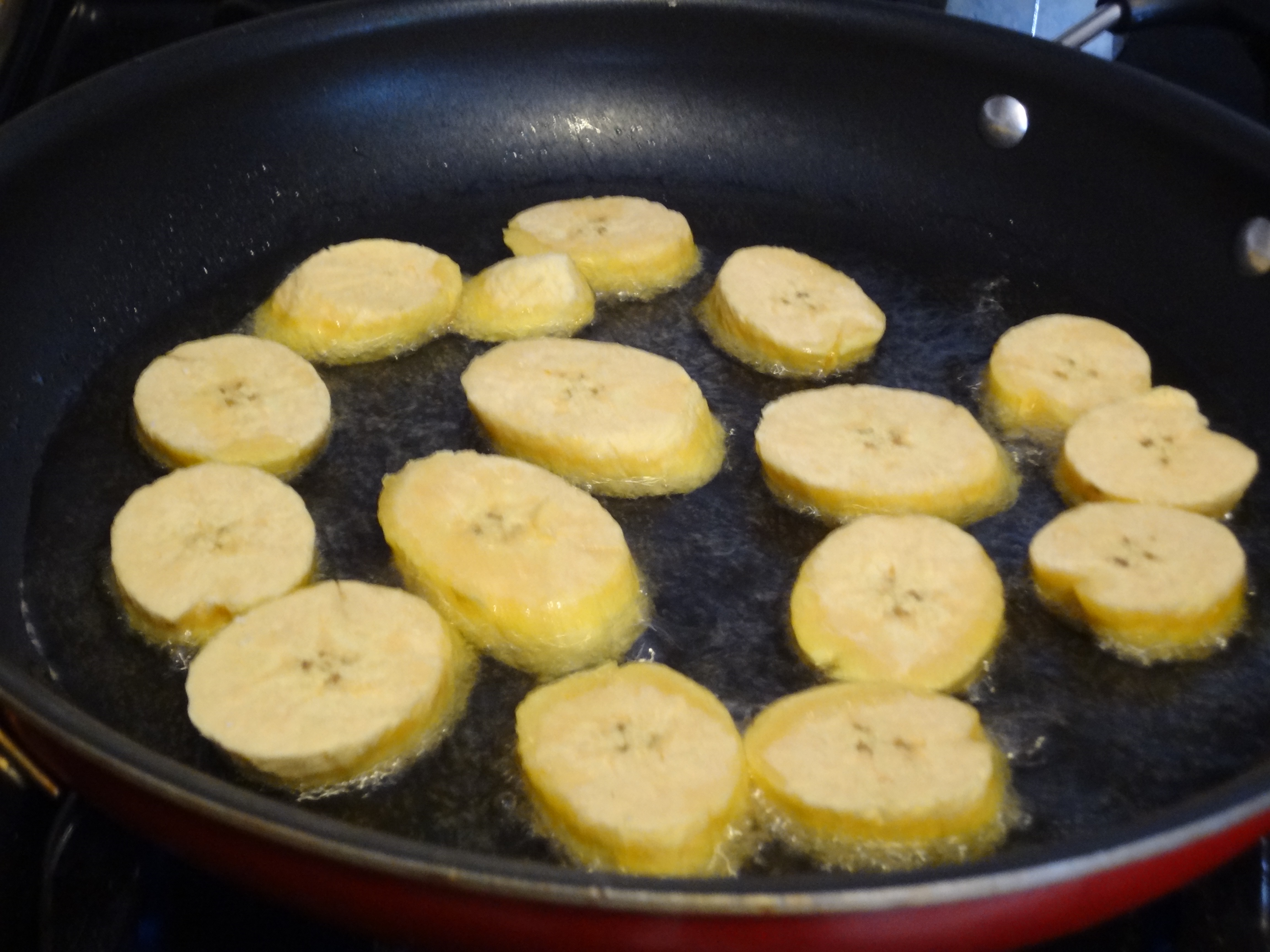
Pour an inch of Vegetable Oil in a frying pan and heat over a medium high flame. When the oil begins to shimmer, carefully place the plantains into the pan using tongs to help minimize the splatter. Fry the plantains, turning them so they turn golden evenly on all sides. This can take about a minute each side. You want to leave space between each plantain, in order not to dissipate the heat from pan, so you will need to fry them in batches.

DSC00966DSC00969

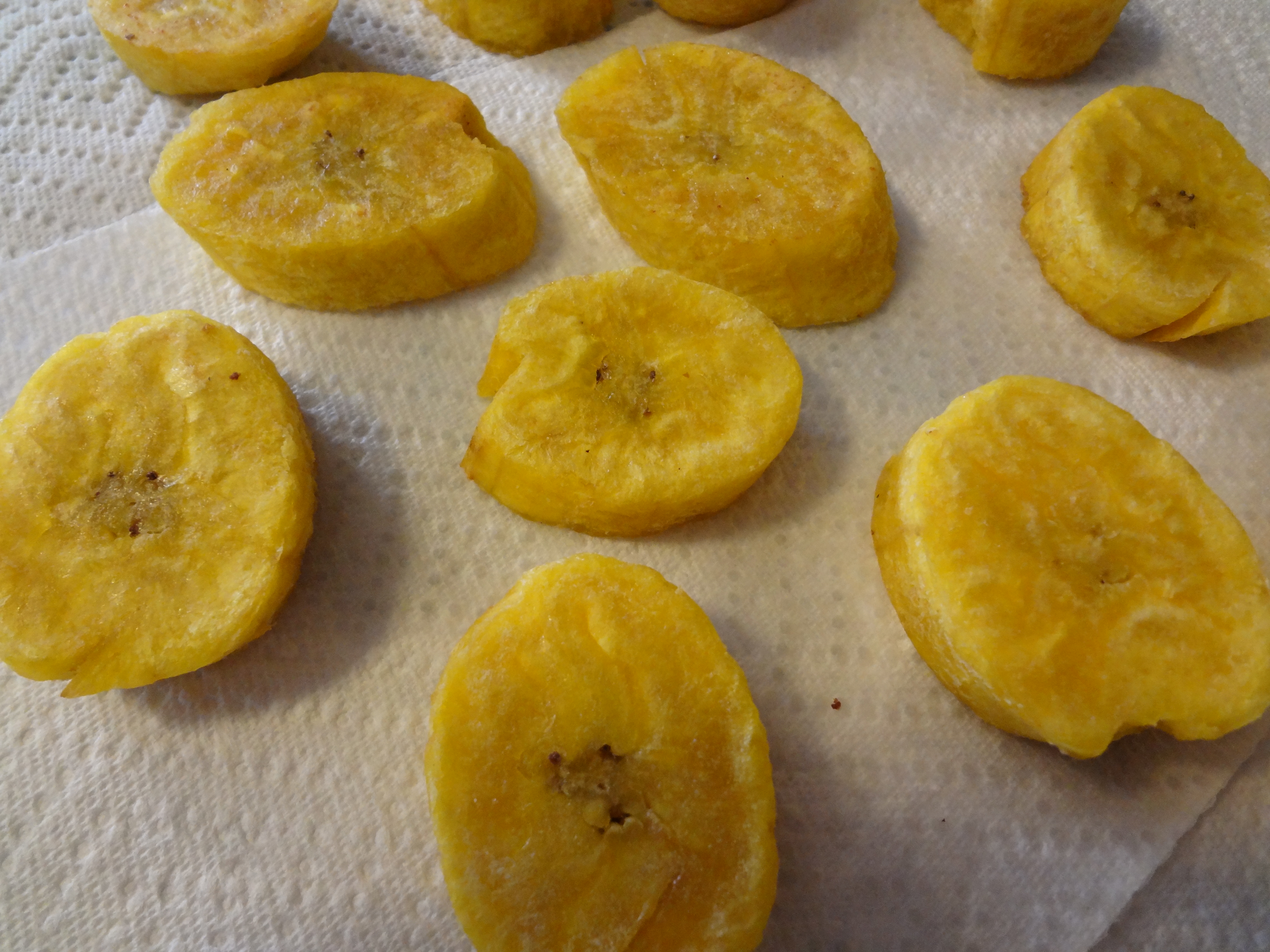
Remove the plantains from frying pan and place on a paper towel covered plate to allow any excess oil to drain and add next batch to the pan. When you have completed frying all your rounds, turn off the stove.

DSC00972

Take a paper bag double folded and fold it in half again with enough length to fold over so they will have equal halves. Place your plantain round on center of one folded half of paper bag and cover with other half of bag and smash down to flatten plantain. Remove flatten plantain and place plate. Repeat until all are flattened.

DSC00974DSC00975

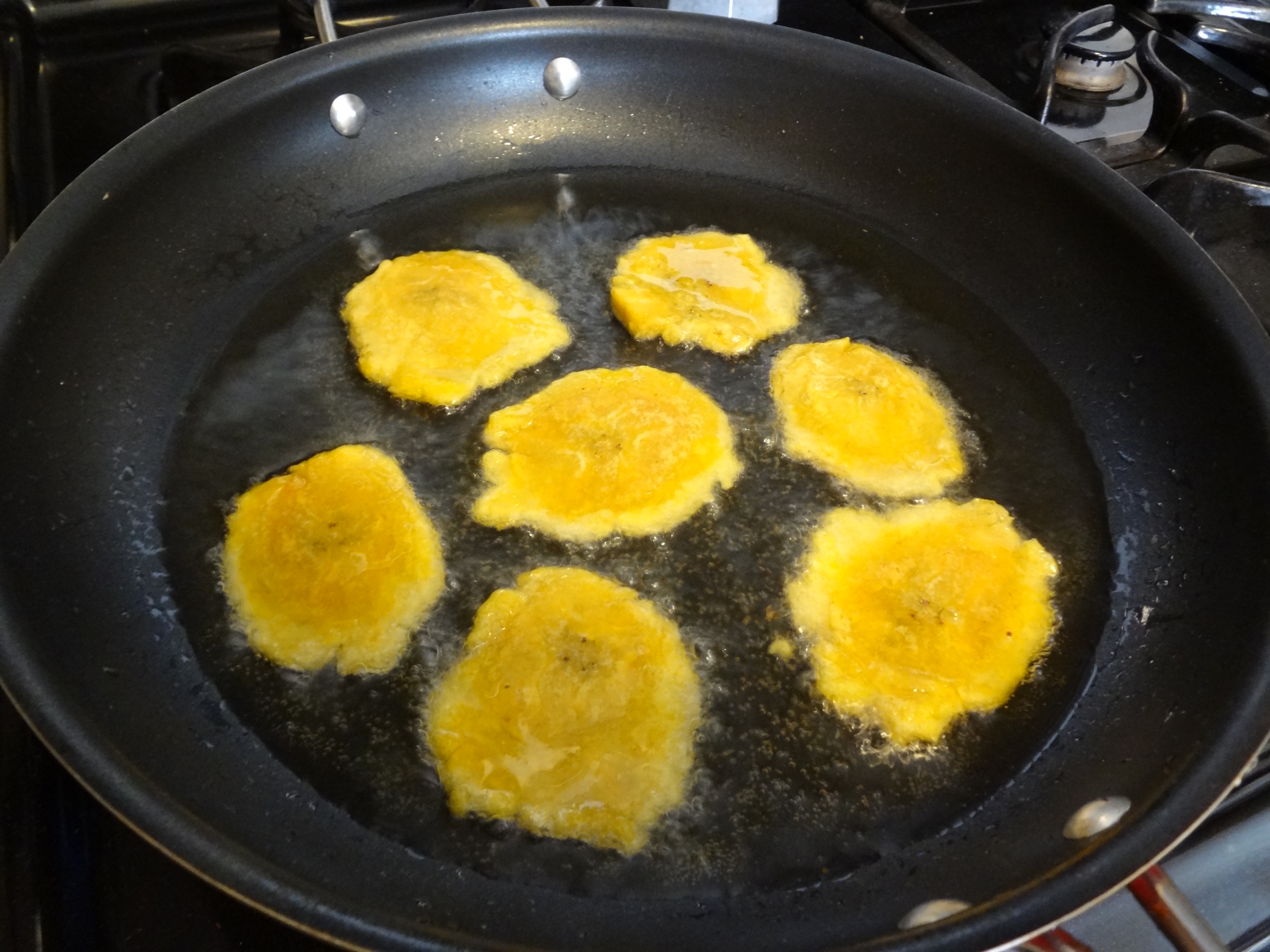
Turn on the stove again to medium flame to reheat the oil. Start frying your smashed plantains. Only put a few in a time, as to not overcrowd the pan, to allow for maximum crispiness. Turn them over after a minute, as they will turn golden brown.

DSC00978

Remove from pan and allow to drain on a paper towel. Sprinkle them with salt. Continue the frying and salting process until all your plantains are double fried.

DSC00982

Serve immediately with Mojo condiment.
Buen provecho!

DSC00987

Sweet Fried Plantains (Maduros)

Featured

Sweet fried plantains, Maduros. Never would you think such a delicious treat could be yielded from piece of rotting fruit, yet in defiance exists Maduros.

The word maduros translates as ripened-which is the type of plantain you will be preparing. They are identified by their yellow to blackened yellow peel, ripened similar to a regular banana.

My sister Patricia recommends feeling the plantain to see if it is soft to the touch, as the yellow to blackened yellow peel may not always indicate that the plantain will be sweet. If they are firm to the touch, you can always put them in a paper bag and let them ripen further for a few days. Don’t shy away from the almost completely blackened plantain, for if the texture is soft, it will produce a very sweet fried treat indeed. Only the firm blackened ones are true pieces of rotted fruit and completely unusable.

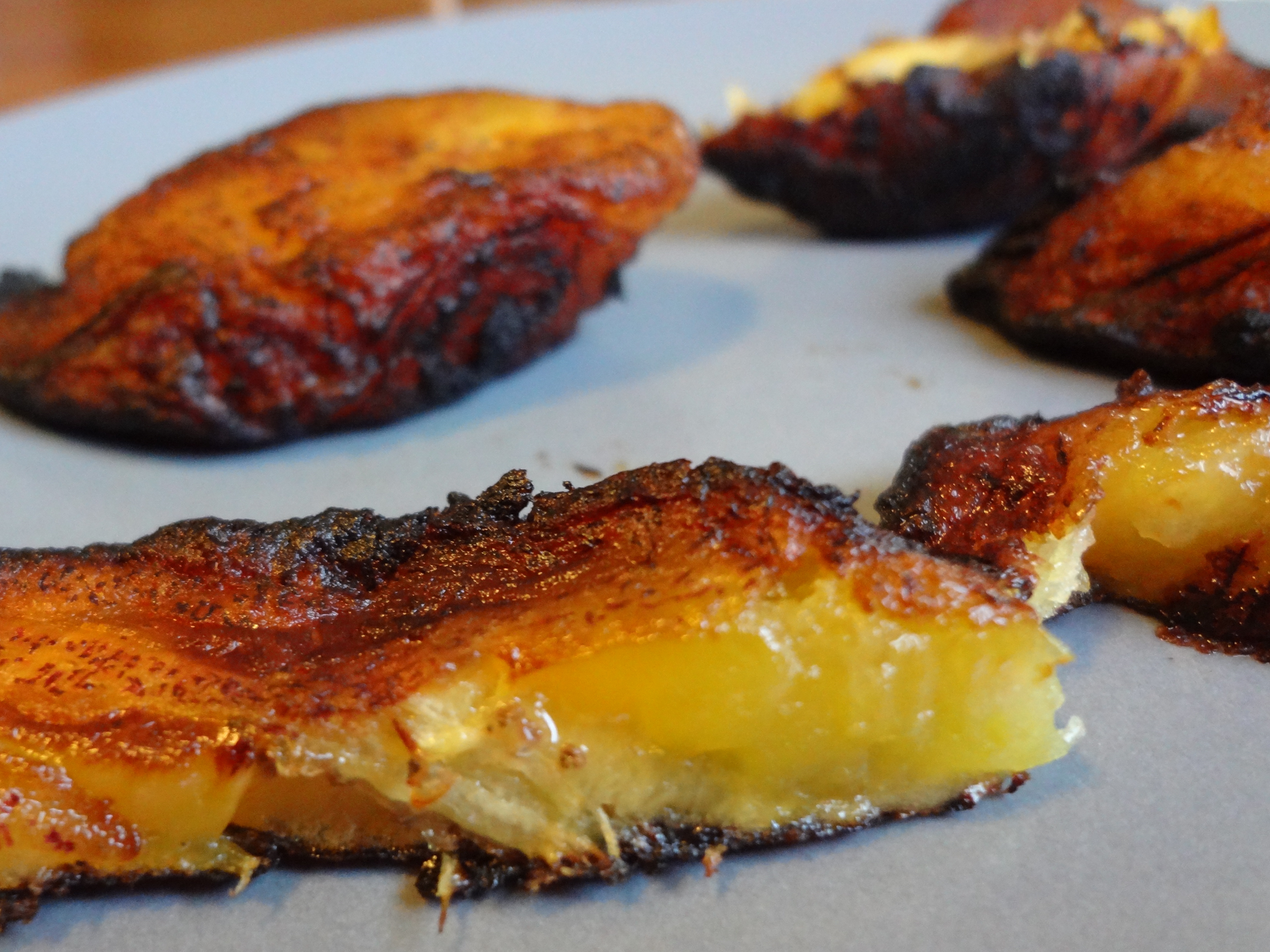
A ripe soft plantain will ensure that the frying process will illicit a crispy rough texture on the outside, and sweet yellow filling within. I like to fry them until they are almost black, then split them open and watch their bright yellow insides goo out.

Maduros are served as the standard side dish. I like to eat a plateful of them as snack sometimes as well.

They are very easy to make and like all fried things, should be eaten immediately after cooking. When serving as a side dish to a larger meal, it is best to allot them as the last item you will prepare.

Maduros

2-3 Ripe Plaintains

Vegetable or Canola Oil

Remove the peel of the plantains by cutting off the top part, then sliding your knife lengthwise, making an incision to reach the flesh. The peel should come off like a jacket.

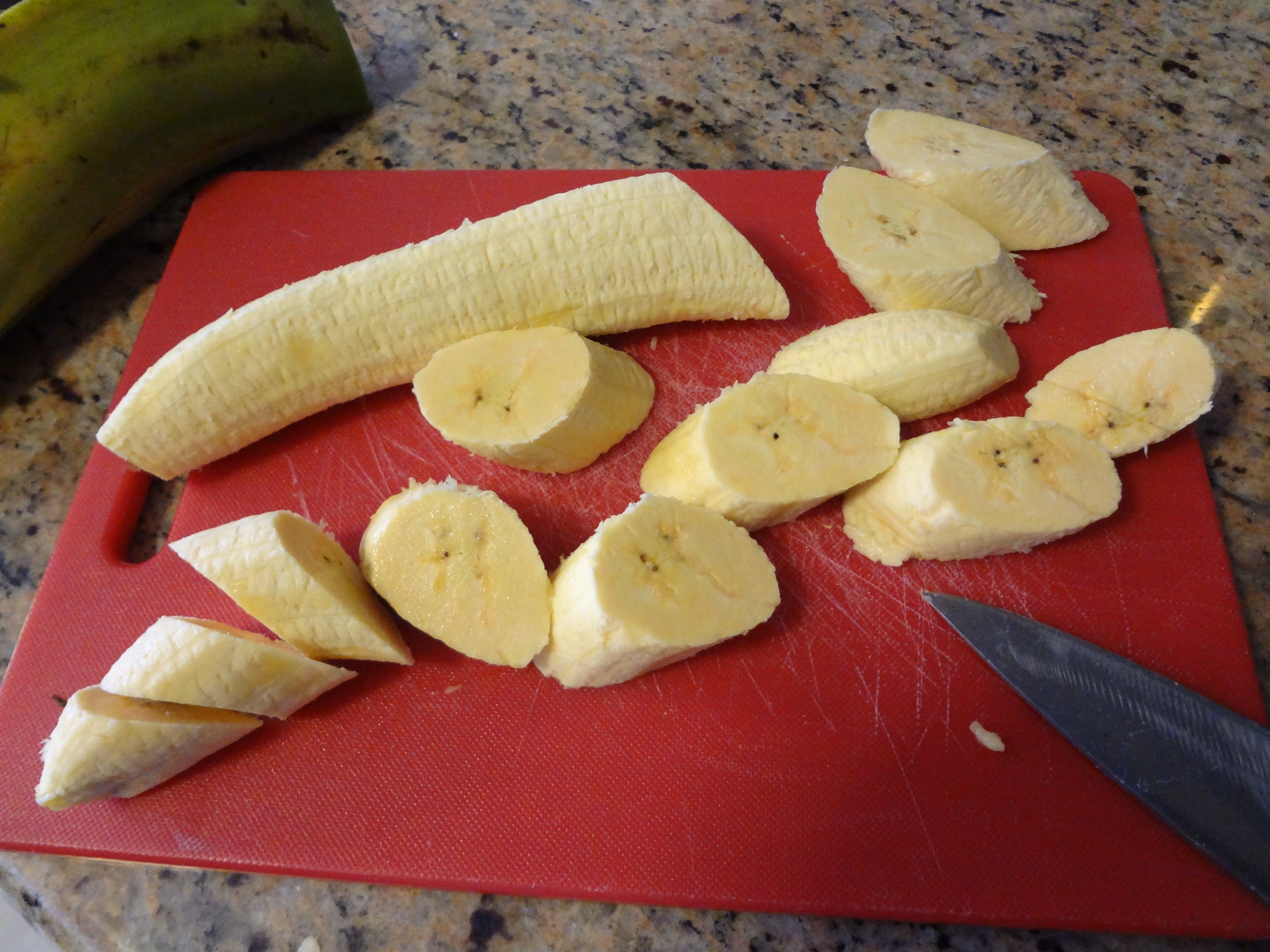
Slice your plantain into oblong slices, about an inch thick.
Pour an inch of Vegetable Oil in a frying pan and heat over a medium high flame. When the oil begins to shimmer, carefully place the plantain into the pan using tongs to help minimize the splatter. You will want to leave space between each plantain during the frying process to ensure they will be crispy, so you will want to do them in small batches. Fry the plantains, turning them so they brown evenly on all sides. This can take about a minute each side.

They will be ready as soon as they are lightly browned. You can also let them get a little more blackened if you prefer. They will still be delicious.

Remove the plantains from frying pan and place on a paper towel covered plate to allow any excess oil to drain. Add your next batch to the pan and repeat until all your rounds are fried.

Serve immediately.

Buen Provecho!

Picadillo

Featured

Picadillo, the ultimate Cuban comfort food. Ground beef sauteed with onions, garlic, green bell peppers and tomato paste. A mixture further enhanced with the addition of dry sherry, olives, capers and raisins. It is a melange of sweet, savory, and briny flavors coming together, served over the canvas of plain white rice.

Picadillo is the dish I use to introduce my friends to Cuban food. Along with black beans, the flavor of this dish is the core essence of what typifies my Cuban cuisine. When I reveal that raisins are part of this dish, most friends seem quite skeptical and a bit fearful. However their trepidation is quickly dispelled once they taste a forkful. The raisins, beef and caper/olive combo all work together to create this most soulful hash.

Growing up, my grandmother, Mama, would make Picadillo once a week. It was staple in our home and as a result I did not consider it as anything extraordinary. Being separated from home and Mama’s cooking, made me appreciate the rich and complex flavors this dish imparts and long for its taste. It is a testament to how simple this dish is to prepare, that I was able to get the recipe over the phone from Mama, and make it with relative ease. I began to understand that cooking gave me the power to bring myself closer to family and home, and to share my culture with my friends.

Picadillo makes great leftovers. It can also be re-purposed as filling for Empanadas (turnovers) or Papa Rellenas (Balls of mashed potatoes filled with Picadillo, breaded and fried). Recipes will follow…

When served with two fried sunny side eggs on top, it is called “Al Caballo”, which translates to “mounted on horse”, as if the eggs were the riding on top of the Picadillo.

Mama taught me to season the meat with oregano, vinegar, salt and pepper before cooking, to add extra flavor to the beef. I usually prepare the seasoned beef first, then let it sit out in room temperature, while I prep the rest of the vegetables.

The combination of green olives, pimentos, and capers is traditionally known as Alcapparado. I like to use pimento stuffed manzanilla olives and mix them with capers.

I use a ground beef with a ratio of 85/15 (I find that little extra fat is what make the ground beef so delicious) Do not drain the fat when it is released from the beef. It becomes part of your sauce, and will reduce with the sherry and tomato paste.

If beef is not to your liking, the same hash can be made with ground turkey or a firm tofu/meatless crumble product. It is the vegetables and seasonings that give Picadillo its distinctive flavor.

Picadillo

Makes four servings

2lbs Ground Beef
1/2 Cup of Olive Oil
1 Large Spanish Onion, diced
1 Green Bell Pepper, diced
5 Garlic Cloves, finely chopped
3 Tbsp of Tomato Paste
15 Pimento stuffed Manzanilla Olives-sliced
4 Tbsp of Capers
1/4 cup Raisins
1/2 Cup Dry Sherry Or Dry White Wine
2 Tbsp of Oregano
3 Tbsp of Apple Cider or Balsamic Vinegar
Salt & Pepper to taste

Before you cut your onions/garlic/bell pepper-In a large bowl, mix the ground beef with the vinegar, oregano, salt & pepper. Allow meat to marinate, while you prep the rest of your ingredients.
Heat Olive Oil in a large saute pan or dutch oven. When oil is hot, add onions to pot and stir. After two minutes, add your garlic and green bell pepper to the pot.
Once the vegetables have softened, about 3 minutes, add the ground beef,  breaking it up with your spoon so the beef remains loose and the vegetables are mixed in.
As the beef begins to brown and the fat is released, stir in the tomato paste and sherry. Let the liquid reduce in the mixture about 5-6 minutes, then add the capers and olives.
You can also add dash of the caper or olive brine to pot for little extra zest or more caper and olives if you like as well. Add salt & pepper to taste.
Add the raisins and cook for another 2 minutes, allowing the raisins to plump up. Serve over white rice.

Buen Provecho!

Basic Black Beans

Black beans. The first taste I remember. The first Cuban dish I learned to cook.  My grandmother, Mama, gave me the recipe over the phone so I could cook Cuban food for my friends in my little apartment. It was an simple recipe and they turned out great. One friend mentioned that he began seasoning his beans in the same fashion. Vinegar, oregano, and bay leaf make this humble dish savory, zingy, yet complex. They are best made in a large batch, so they can be consumed over a week. The ripen with flavor each day, as does any good soup or stew.

Serve them over white rice.

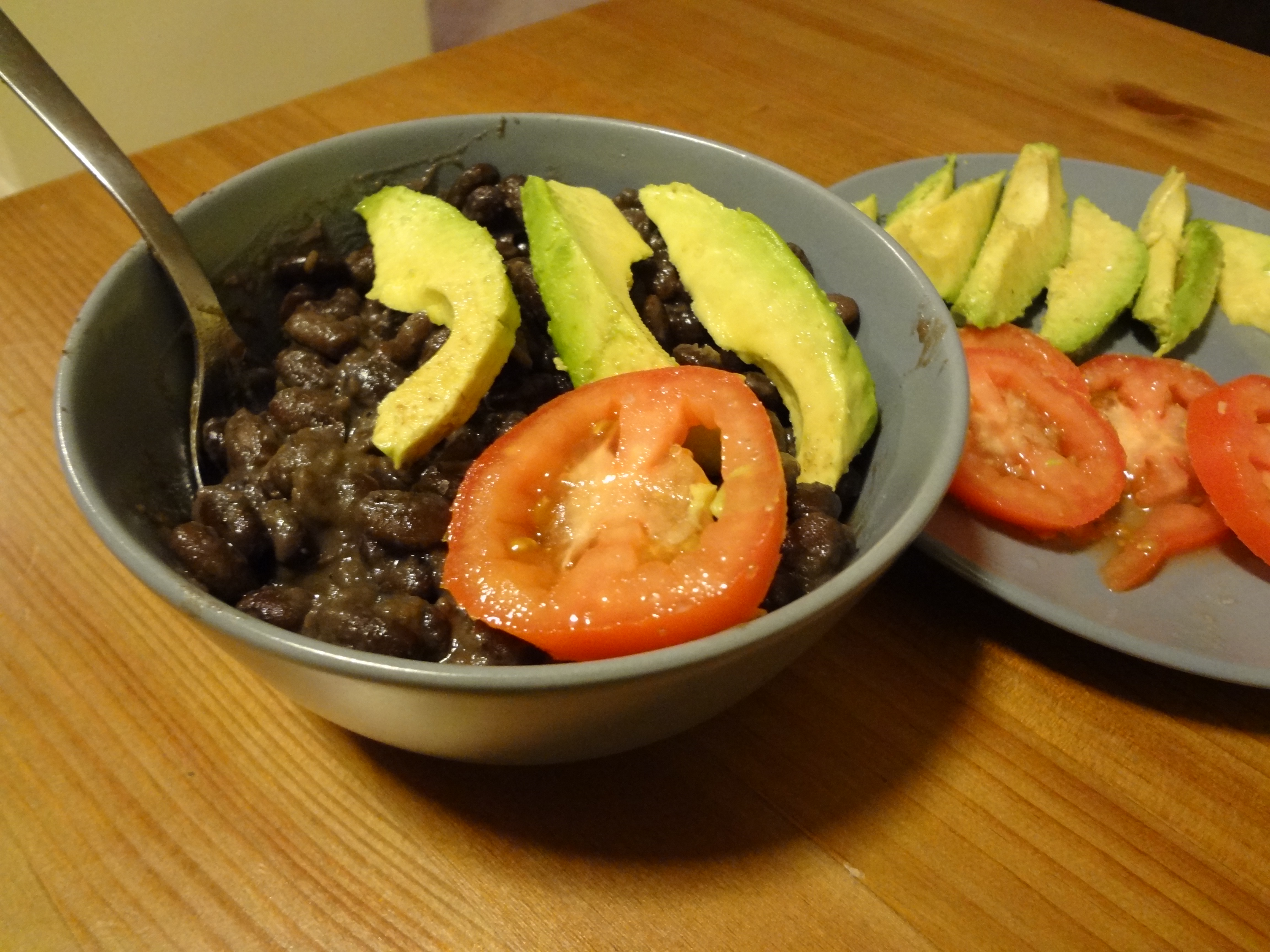
Or enjoy them alone in a bowl, with some sliced tomato and avocado on top, or on the side to alternate your bites.

My family ate them cold, spooning them onto saltine crackers. Mama would puree them on third day transforming them into a soup, which I loved to eat with garlic croutons.

There are many versions of the black bean recipe, incorporating pork products, cumin, cilantro, wine, sugar, assorted family secrets etc.

I plan on exploring a few of these variations, but I would like to present the basic recipe that Mama gave me so many years ago.

The recipe is for both dry bean and canned bean preparations-slow and fast methods.

Quick note about preparing dry beans. The night before I’m going to cook the beans, I place 2 cups of dry beans in a Tupperware container (you can use any container with a lid), and add enough water to cover the beans at least inch above-this is make sure the beans remain covered with water as they will duplicate in size overnight. The next day before cooking them, I pour them into a colander and rinse them cold water. I do not add any more water until they enter the pot.

BLACK BEANS (FRIJOLES NEGROS)

INGREDIENTS

1/3 Cup of Spanish Olive Oil
3 Cans of Black Beans with Liquid or 2 Cup of Dry Beans (4 Cups after Soaking)
1 Large Spanish Onion Diced
5 Cloves of Garlic Diced
1/2 Green Bell Pepper Diced
1 Tablespoon of Oregano
2 Tablespoon of Balsamic Vinegar
2 Bay Leaves
Salt & Pepper to taste.

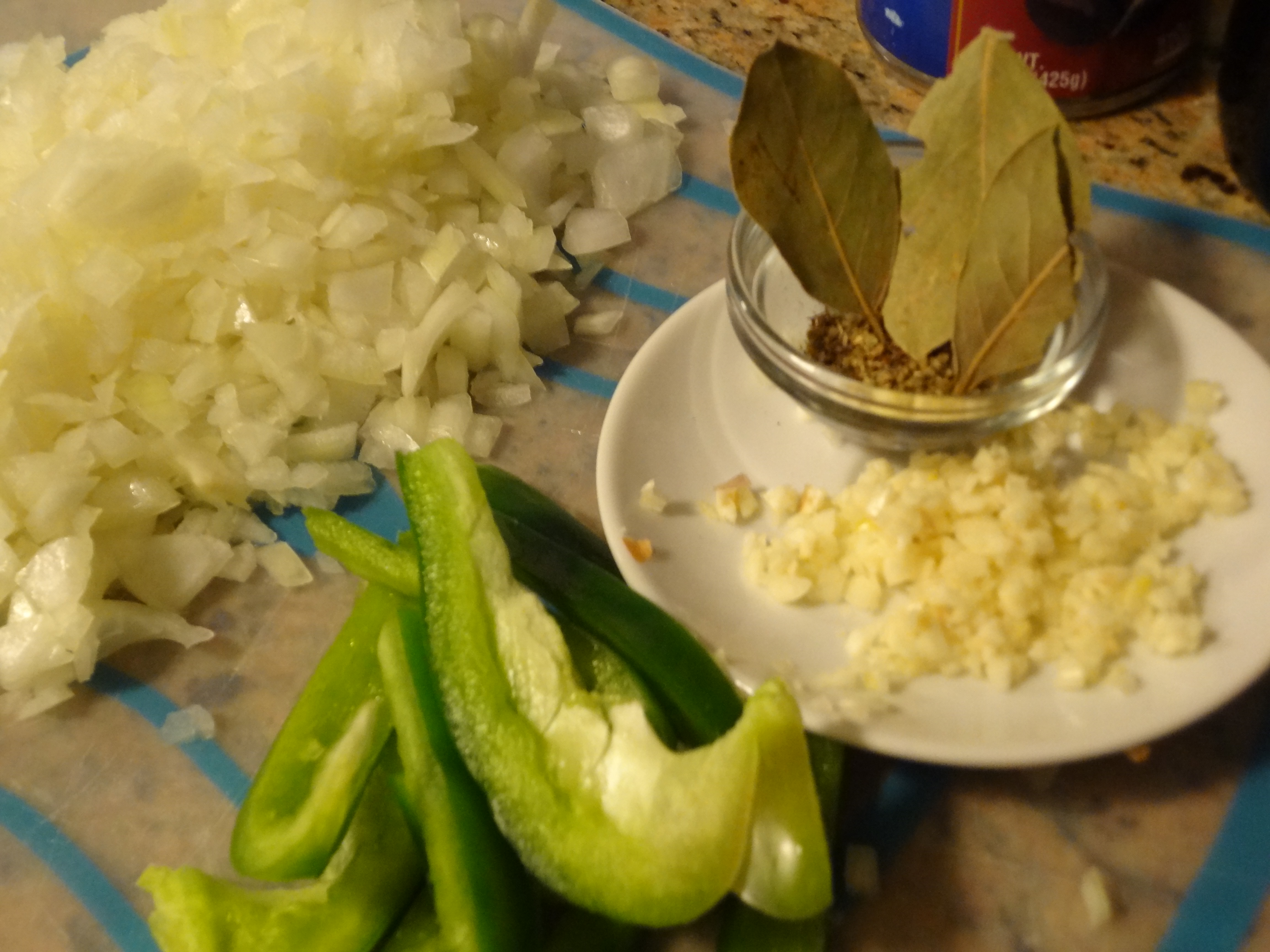
Using a dutch oven or any 5-6 quart pot, heat the olive oil on a medium flame, until it begins to shimmer. Add onions to pot, making sure to get them coated with oil, spreading them out to distribute the heat. When onions begin to soften and turn translucent, mix in the garlic.

Onions take longer than garlic to soften, and I used burn my garlic when I put them in together at the start. My friend Lauren taught me to start with the onion, then add garlic, and I’ve never burnt the garlic since.

Let the garlic and onion combine, turning soft and yellow together.  I love the smell of them cooking. It’s the scent of possibilities-the beginnings of a dish. The longer you allow your onions and garlic to soften, the deeper the flavor they will impart.

FOR CANNED BEANS-Add the black beans with can liquid.

FOR DRY BEANS-Add the pre-soaked beans to onion/garlic mixture, mix, and add salt & pepper. Then add 3 cups of water to cover the beans with liquid to allow them to poach, yet not too much to dilute the flavor.

After adding the beans, stir in oregano, balsamic vinegar, bay leaves, salt & pepper. Lower heat, cover and simmer.

FOR CANNED BEANS-They will be ready in 45 minutes. This is not to cook the beans, as they are already done, but to allow all the flavors to come together.

FOR DRY BEANS-They will take about 2 1/2 to 3 hrs in order to cook the beans to tender.

Keep tasting to see if you need to add more salt or vinegar. The dry beans will definitely need salt, but the canned beans may not need as much. I like a bit of a sweet tang to my beans, so I tend to add more vinegar.

Serve over white rice or eat them straight from the bowl.

Beans can last up to 5 days, maybe less depending on rate of consumption…

Buen Provecho!